
banxe
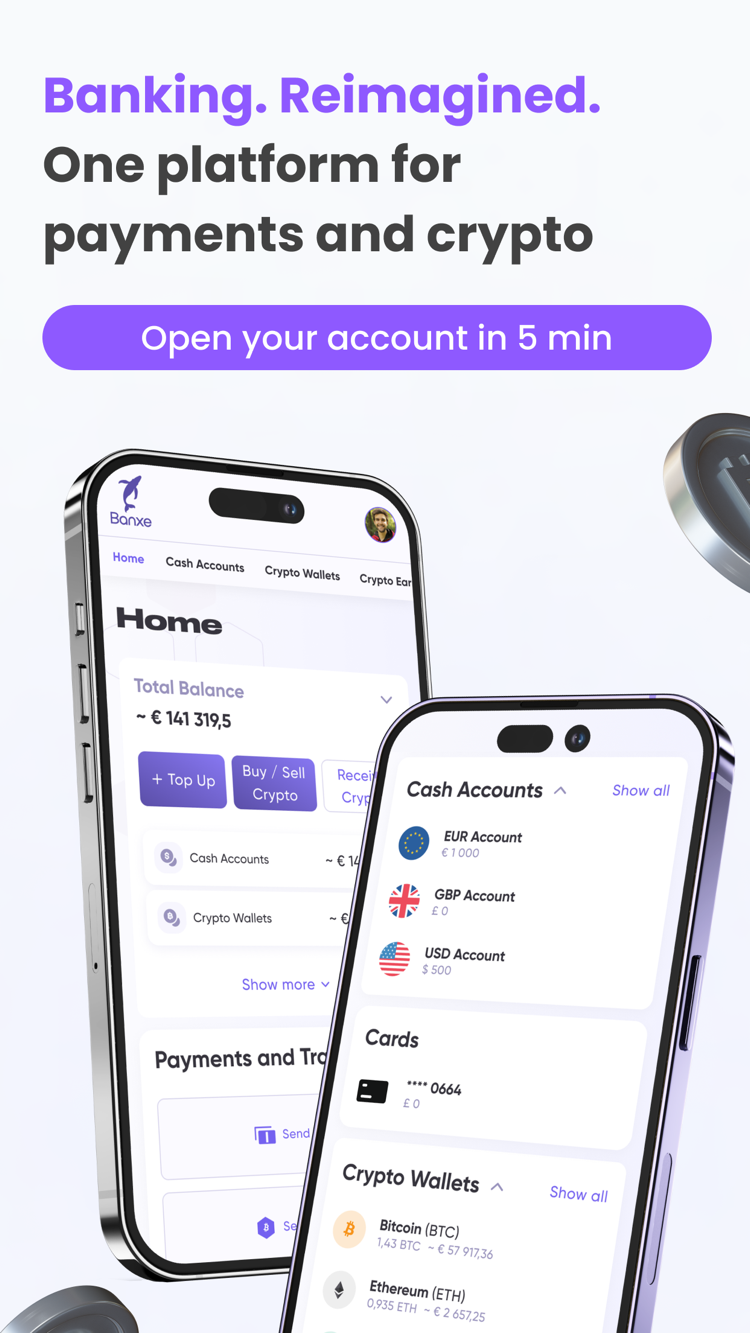
AI agent layer for Banxe (banxe.com) — the FCA-regulated fintech platform that lets individuals and businesses hold, move, and trade across cash (EUR/GBP/USD) and 350+ cryptocurrencies in one account.
- client
- Banxe
- industry
- Fintech / Crypto / Regulated banking
- role
- Dedicated team — 2 fullstack AI engineers
- timeline
- Ongoing
- team
- 2 fullstack AI engineers
- status
- ongoing · ongoing
- client
- visit ↗
Banxe — Case Study
AI agent layer on top of Banxe, the FCA-regulated platform that combines a multi-currency account (EUR/GBP/USD), debit cards, accounting tooling, and a crypto wallet/exchange covering 350+ assets.
Summary
Banxe is a UK-based, FCA-regulated fintech that puts cash banking and crypto inside one account: businesses and individuals hold multi-currency balances, transact with cards, and move into and out of 350+ cryptocurrencies without leaving the product. topsweteam runs a two-person team of fullstack AI engineers on the agentic layer of the platform — the AI workflows that sit on top of the core banking and crypto stack. Engagement is ongoing.
- Client: Banxe (banxe.com)
- Industry: Fintech / Crypto / Regulated banking
- Engagement: Dedicated AI engineering team
- Timeline: Started 2026, ongoing
- Team: 2 fullstack AI engineers
- Status: Ongoing
Challenge
Adding AI agents to a regulated financial product is a different problem from adding them to a consumer app. The agents have to be useful enough to change the user experience, conservative enough to fit FCA expectations, and integrated cleanly with the existing banking and crypto rails — which were built before agentic patterns were on the roadmap. The team also has to ship at the cadence of a product team, not a research team: working agents in production, not demos.
Approach
We staffed the work with two fullstack AI engineers — engineers who own both the agent logic and the surrounding application code, rather than splitting "AI" and "platform" into separate disciplines. The split is rarely worth it at this team size, and it's actively counter-productive when the agents need to call into platform APIs, write to the same data stores, and respect the same compliance constraints as the rest of the system.
- Python + FastAPI for the application layer. Standard, well-understood, fits the typical AI-engineer skill profile, and gives us a fast HTTP surface for the agent endpoints.
- LangGraph for agent orchestration. Choice driven by the need for stateful, multi-step agent workflows with branching and tool calls — the shape LangGraph is designed for. Graph-structured agents are easier to reason about and debug than ad-hoc chains when the workflows get non-trivial.
- Fullstack engineers, not split roles. The agent layer is application code that happens to use LLMs; treating it as a separate discipline introduces handoffs that slow the work down without adding rigor.
Solution
The work covers the agentic layer that sits on top of the Banxe core platform — the workflows that turn structured banking and crypto operations into conversational or assisted experiences. Backend services are Python/FastAPI; agent orchestration runs on LangGraph; integration into the rest of Banxe happens through the platform's internal APIs.
Key features shipped
- AML AI agent. Agentic anti-money-laundering workflows that augment Banxe's compliance review. Agents do the first-pass triage that compliance officers used to do manually, with an audit trail back to the underlying evidence.
- AI-native CRM integration. Agentic surfaces wired into the customer-relationship workflow so the team's customer interactions can be assisted (and partly automated) end-to-end.
Outcome
The engagement is ongoing. The team has stayed at two fullstack AI engineers — that staffing model has held up as the agent surface area has grown.
- Live AI agent capability inside an FCA-regulated platform
- AML AI agent supporting 10,000+ internal client transactions
- AI-native CRM integration in production
- Two-engineer team carrying both the agent logic and the surrounding application code
Tech stack
Backend: Python, FastAPI Agent orchestration: LangGraph Integration surface: Banxe core platform APIs
What we learned
- Splitting "AI" and "platform" engineers at this scale costs more than it buys. The agents are application code — the people writing them need to own the surface that calls into the rest of the system.
- LangGraph fits stateful, multi-step agent workflows. Graph structure makes the runtime debuggable in a way ad-hoc chains aren't, especially when tool calls and branching are involved.
- Regulated financial AI is a different cadence. Conservative defaults, observable agents, and "what would compliance ask?" as a code-review criterion shape the work more than they would in a consumer product.
tech
- backend
- Python, FastAPI
- ai
- LangGraph